
Facilitation
In-Person vs Online Facilitation Training: Which Is Right for You?

Laura Faint
You’ve decided to invest in facilitation training. Great call.
Now comes the question: should you learn in-person or online?
The good news is that both work well. We’ve trained over 35,000 Facilitators across both formats. Both can help you become a confident, professional Facilitator, but they’re obviously very different experiences, and the right choice depends on how you learn best, what you can realistically commit to, and what you’re optimizing for.
Here’s an honest breakdown:
What In-Person Training Does Well
There’s something special about being in a room with people, learning together, and sharing the real-time experience that you can’t fully replicate through a screen.
Immersion
When you’re physically present for an in-person training, you’re all in. No Slack notifications, no “quick” emails between sessions, no distractions from your everyday life.
That level of immersion accelerates learning. You go deep in a way that’s harder when training competes with your regular work and everyday responsibilities.
Real-Time Feedback
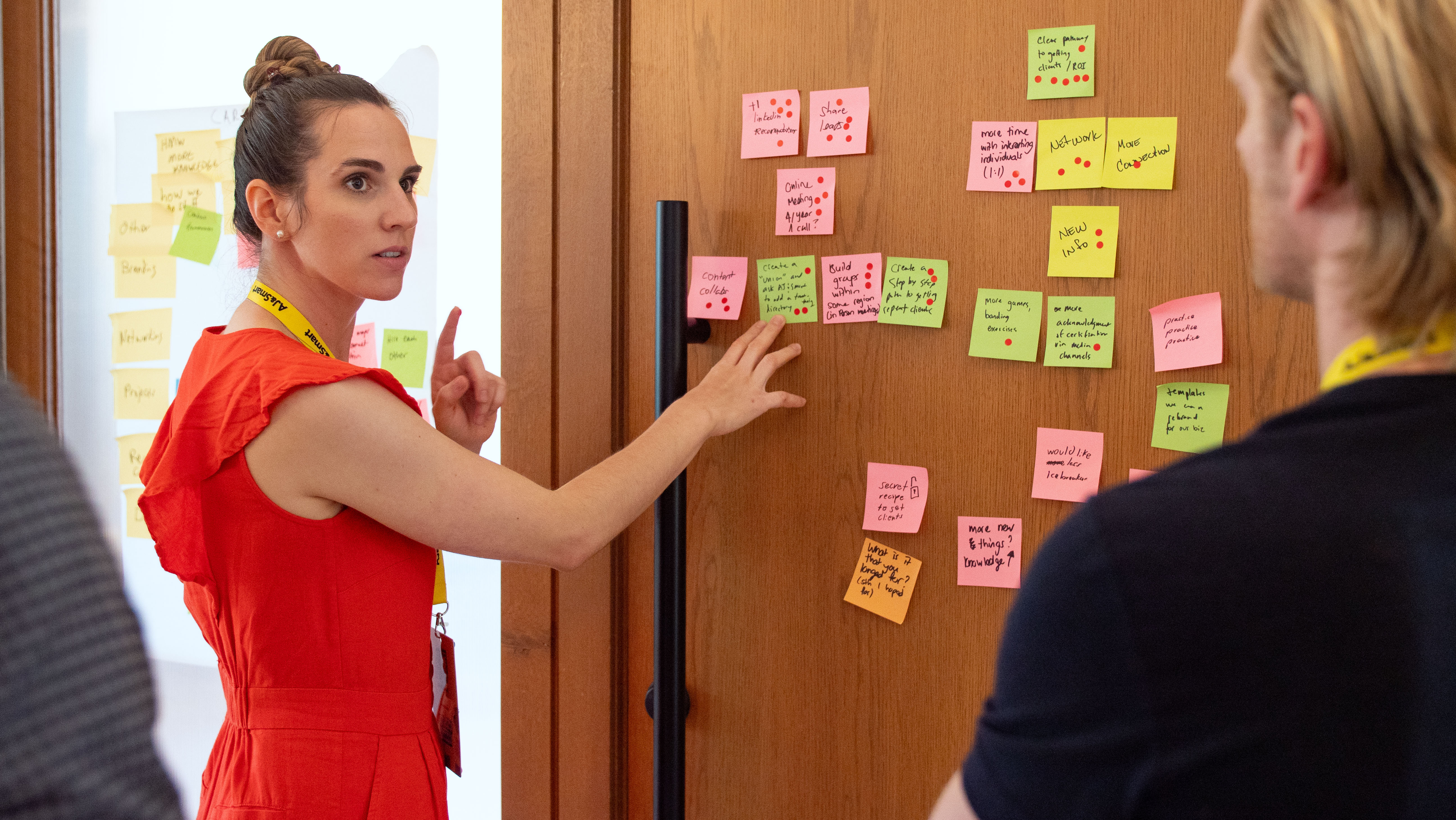
In-person, an instructor can watch you facilitate and give feedback immediately. They can see your body language, your energy, the subtle stuff that’s hard to pick up through video.
That real-time loop is powerful. You try something, get feedback, try again - all in the same session.
Pressure-Testing
Facilitation involves some performance pressure. You’re in front of a group, things happen in real-time, and you have little time to pause and think.
In-person training recreates that pressure. When you’re facilitating a group of 15 people watching you, you can’t fake it. That real-time discomfort is where growth happens.
Connection
You build relationships with your cohort. You share meals, have conversations, and experience the learning together.
Those connections often last well beyond the training. Many of our Full-Stack Facilitator alumni still collaborate and refer work to one another years after the training.
Reading Physical Presence
Facilitation involves reading a room, body language, and energy, and picking up on subtle signals that something’s off.
You can learn concepts about this online. But actually experiencing it - being in a room and feeling when the energy shifts - that’s different.
Where In-Person Falls Short
In-person learning often has a strong edge over online, but it isn’t always the perfect solution. Here are some things to consider if you’re thinking about taking an in-person facilitation training.
Time Commitment
You’ll likely need to block out multiple consecutive days, which you don’t necessarily need to do for an online training. For many people, taking multiple back-to-back days off work and personal responsibilities is too challenging.
Cost
Travel, accommodation, the program itself, and the opportunity cost of being away from work. In-person training is a significant investment. It is worth it for many people, but it’s not necessarily accessible for everyone.
One Intense Burst
You learn a lot in a few days, but then it’s over. You go back to your regular life and have to apply everything without the structure and support of the training environment. Some people thrive with this. Others forget half of what they learned within weeks. The key is to take action (even if it’s just something small) as soon as you can after the in-person training ends to leverage the momentum.
Limited Scheduling
In-person programs run on specific dates and that means you can be waiting many months before being able to start your training (which can be particularly frustrating if you’re excited to get started!). We often let our Full-Stack Facilitator students start with online learning so they can dive in right away if they’re eager to get started. This has the added benefit of being well-prepared for the in-person training experience.
What Online Training Does Well
Online isn’t a consolation prize, and when done right, it has real advantages.
Flexibility
Learn when you want, where you want. With online learning, you can fit training around your actual life instead of rearranging your life for in-person training. For professionals with busy personal lives, this matters a lot.
Pace Control
Didn’t fully understand something? With online you can easily go back and rewatch. Need to pause and take notes? It’s easy to take as many breaks as you need. Already know a section? With one click you can skip forward. You control the pace. In-person, there’s often less control.
Lower Barrier
With online learning, there’s less back-to-back time commitment, often lower cost, and no travel logistics to figure out. Because of this, it’s more feasible for more people to access online training, and they can start sooner.
Ongoing Access
Most online programs let you revisit content later. Six months from now, when you’re facing a challenging facilitation situation, you can go back and rewatch the relevant section.
Where Online Falls Short
Online learning has its limitations, too. Here are some of the things that give in-person training the edge.
Less Pressure
Practising facilitation through video feels different from being in a room with people watching you. The stakes feel lower, and the discomfort that can drive growth is muted.
Harder to Read Remote Groups
If you’re primarily facilitating in-person workshops, learning online means you’re practising in a different medium than you’ll be performing in. Though honestly, many Facilitators now work virtually, so this matters less than it used to.
Self-Discipline Required
With online learning, nobody’s standing there waiting for you to show up. If you don’t have the discipline to actually complete online courses, that flexibility becomes a liability.
We see this regularly. People sign up excited for online programs, then life gets busy, and the course sits unwatched.
Less Spontaneous Connection
You can build an incredible sense of community online. Many of our Workshopper Master students have told us that the community aspect of the program was the most powerful thing in moving them forward, but online connections do require more intentionality. The casual conversations that happen naturally in-person take more effort virtually.
How to Choose
Here’s our honest take on who should do what:
Consider In-Person if:
You learn better with people around you. Some people absorb information much better in a classroom environment than on their own.
You can genuinely commit the time. Not “probably can make it work” but actually are willing to block dates and arrange travel.
You have the budget. Travel + accommodation + program fee + time away from work.
Facilitation will be central to your career. If you’re building a facilitation practice or facilitation is a major part of your role, the investment pays off.
You want the experience, not just the learning. Our Full-Stack Facilitator graduates describe the experience as transformative way beyond just skills. That’s harder to replicate online.
Consider Online If:
You can’t block multiple consecutive days. If figuring out the logistics of taking multiple days off work/responsibilities feels daunting, starting with online learning is a great way to leverage your current interest and excitement and avoid losing steam.
Budget is a factor. Online programs generally cost less, and you avoid travel expenses.
You’re disciplined about self-directed learning. You actually finish courses you start and don’t find it difficult to motivate yourself to spend some of your free time learning.
You want to apply what you learn as you go. Spaced learning over weeks is a great way to close the gap between learning and iterative implementation.
You’re testing whether facilitation is for you. The lower commitment of online learning makes sense when you’re exploring.
The Hybrid Path
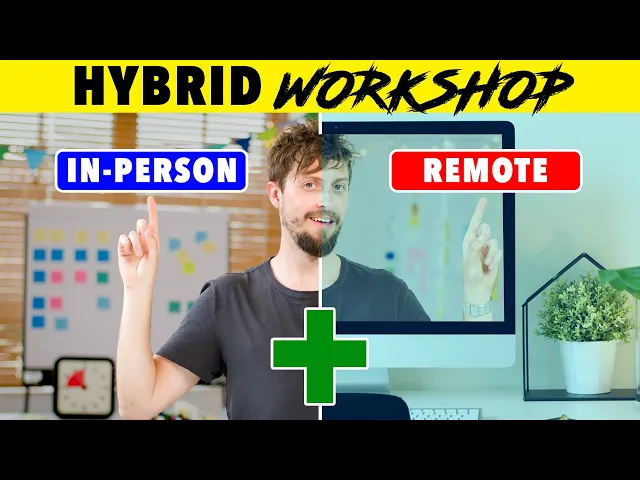
After training thousands of Facilitators, we realized that the best path isn’t either/or. Many of our best graduates completed both our online and in-person training.
A pathway we’ve seen some of the best Facilitators take is starting out with our online program, Workshopper Master to build critical foundational knowledge and skills at their own pace. Then, once they knew facilitation was something they wanted to go deeper with, they invested in attending our premium in-person immersive Full-Stack Facilitator to take things to the next level.
These two programs are incredibly complementary and allow students to leverage the best of online and in-person learning.
What’s also great about hybrid learning is that it gives you a sense of what hybrid facilitation is like. If you experience both in-person and online elements of your facilitation training, you’ll likely be much more comfortable making that transition in your actual facilitation work.
The Bottom Line
Deciding whether to learn facilitation online or in-person is ultimately a decision based on how you personally work best, how quickly you want to get started, what your budget is, and your ability to fit a training around your work/personal situation.
Based on years of training Facilitators, there’s really no “right” answer. We advise our potential students not to overthink it and to commit to whichever format allows them to take relatively quick action, so they don’t lose momentum and excitement about pursuing learning facilitation.
With that said, we’ve seen excellent, lasting results from graduates who take the hybrid path, combining online, self-paced learning with attending an in-person intensive.
Next Steps
If you’re not sure where to start or not ready to commit to a paid training just yet, then we have hundreds of hours worth of free facilitation videos on YouTube. Check them out to see if our approach resonates. Then, if you want to go further, decide on the level of investment and training format that makes sense for you.
Free Facilitation Resources!
Join the Facilitator.com newsletter to get free Facilitation tools, news,
methods and resources right to your inbox.
Sent sparingly. Always relevant.