
Facilitation
The Complete Guide to Facilitation Training (2026)

Laura Faint
If you’ve ever walked out of a meeting thinking “well, that was a waste of everyone’s time”, you’re not alone.
Most meetings are terrible and follow a predictable, dysfunctional pattern: the loudest people speak the most, quieter people get ignored, solutions get discussed before problems are identified, everyone gets tired, nothing gets achieved, time runs out, and the meeting ends with the need for…another meeting.
Here’s the thing: it doesn’t have to be this way.
And here’s the other thing: becoming someone who can solve the problem of bad meetings (aka a Facilitator) can open up some really exciting career opportunities (more on that soon!).
Meetings are where important decisions are made and where a lot of strategic, collaborative work occurs, so it makes sense to try and make them more effective.
The good news is that there is a world where meetings are both effective and (believe it or not) enjoyable…
Where decisions get made and next steps become clear, and where meetings actually lead to real progress, every single time. And the best part: this leads to a huge reduction in meetings overall.
It might sound too good to be true, but after years of trying to solve the problem of bad, ineffective meetings, we finally learned a solution that (when executed correctly) has the power to literally end bad meetings forever.
So, what’s the solution?
Bad meetings and messy collaboration can be solved by turning meetings into workshops (or just using smaller workshop exercises in meetings) and most importantly: having a Facilitator run and guide the session.
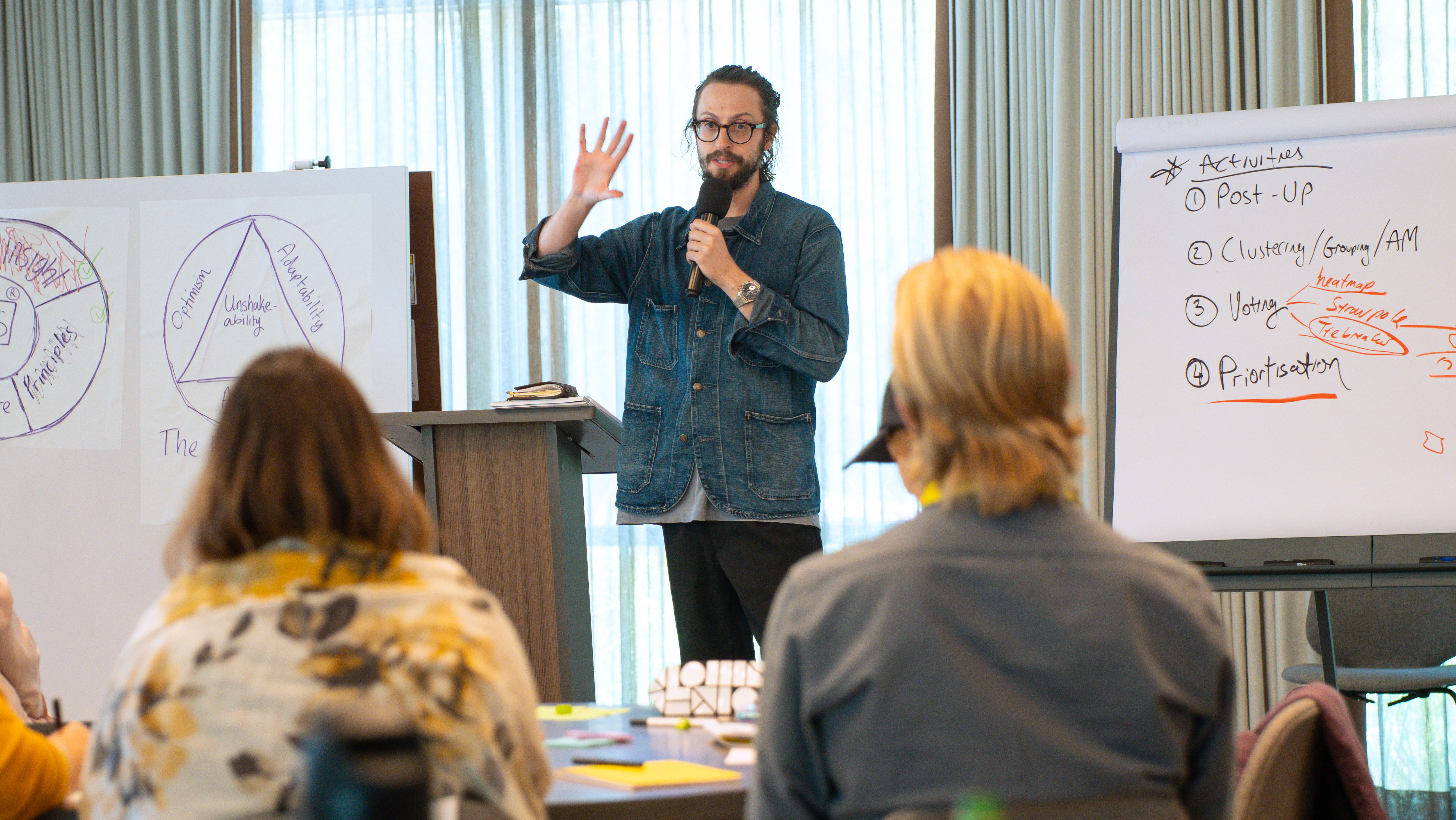
The purpose of this article isn’t to teach you what facilitation is and what Facilitators do (we do have lots of free content on this topic, though, like the videos below), it’s to help anyone interested in learning how to facilitate figure out which facilitation training they should consider.

In short, a good facilitation training will teach you how to make group work actually work. How to walk into a room full of people with different opinions, competing priorities, and limited patience, and help actually get somewhere useful instead of going around in circles.
A good facilitation training should equip you with a robust toolbox of tactics, exercises, and strategies so that you’re able to confidently facilitate any type of session, regardless of the scenario or challenge at hand.
But a lot of facilitation training can do all of this and still be problematic. Why? Because they prepare you for best-case scenarios. Everyone shows up on time. The stakeholders agree. The technology works. Everyone is in a good mood. The plan unfolds perfectly…but when does that ever actually happen? From our 15+ years of facilitation experience, almost never.
Real-life collaboration is messy. And if your training doesn't prepare you for messy, you’re going to struggle as a Facilitator.
This guide aims to hopefully help you avoid that by telling you what you need to know about facilitation training: what it actually is, whether you need it, how to choose a program, and how to avoid the ones that could leave you panicked when things go sideways.
What Is Facilitation?
Let’s clear something up first.
Facilitation isn’t presenting. It’s not about standing at the front of a room delivering information. That’s training or speaking, and that’s you being the expert.
Facilitation is something different. Your job as the Facilitator is to help the group do their best thinking. To bring out their superpowers and help them do their best work. You’re the guide, not the hero. The spotlight is on them, not you.
When participants don’t have to think about how to do something, which process to use, what the next step should be, or how team dynamics should work, they can focus on doing the work they were meant to do.
A good Facilitator knows how to:
Design and run sessions that actually achieve something
Read the room and adjust on the fly
Handle the person who won’t stop talking
Draw information out of the quiet people who have great ideas
Keep things moving without making people feel rushed
Navigate disagreements without letting them derail everything
End sessions with clarity and concrete next steps
A good facilitation training will teach you how to do all of this. The techniques, yes. But more importantly, the judgment to know which technique to use when, and how to confidently navigate complex, emerging real-time dynamics.
Who Needs Facilitation Training?
Honestly? Anyone who wants meetings or group sessions with their team or clients to be more effective.
But let’s get specific. You should seriously consider facilitation training if:
Your meetings regularly go off track or end without decisions
You lead sessions as part of your job (strategy sessions, planning, retrospectives, check-in meetings)
You’re a Consultant who wants to deliver more value to your clients (and hopefully charge more, too!)
You want to be more involved in strategy and less involved in logistics and executing on tasks
You manage a team and collaboration feels harder than it should be
You get nervous when things don’t go according to plan
You’ve ever “seriously…another meeting?!”
Here are the people we typically see in our facilitation training programs:
Product People who are tired of being in constant meetings that drag, projects that never seem to go to plan, and retros that never change anything.
Consultants who want to run sessions that their clients rave about, instead of constant meetings that don’t move things forward.
HR and L&D people who want to help their colleagues enjoy their work more and create more impact.
Coaches who are looking to add group work to their practice.
Designers who want to move away from pure execution and towards strategy work.
Entrepreneurs who want to build a company culture where collaboration actually works.
The common thread? They’ve all realized that you can be smart, experienced, have great ideas, have a great product/service, and be working with talented people, but if the way collaboration happens is fundamentally broken, it doesn’t matter.
You also need the skills to be able to bring people together and unlock their superpowers, while seamlessly navigating the inevitable complexity that arises when people work together. That’s facilitation.
And as a side note: AI is incredibly powerful, and it’s only going to get better. It can ideate almost as well as any human. And yes, it can help us navigate so many of the challenges that arise when working in teams (including some of the challenges mentioned above).
But humans are the masters of unexpected connections, weird tangents, and productive friction that all emerge from real people working together in real-time.
The most exciting innovations started as strange and illogical ideas, from the synchronicity that comes from a diverse group of humans “jamming” together through the messiness and chaos. This is why (for the foreseeable future, at least) human collaboration is unique and important, and facilitation can help us leverage this even better.
What Do You Learn in Facilitation Training?
There are lots of different ways to learn facilitation, and luckily there are pathways for any price range (from $0 to $10k+).
Much of the facilitation training out there is relatively good, but many of them fail to teach the most important aspect of facilitation, leaving budding Facilitators with a critical gap in their knowledge. This article is designed to hopefully help you avoid that.
The Problem with Most Facilitation Training
Most programs teach you a bunch of techniques: how to run a brainstorming session, how to do a voting exercise, how to facilitate a decision-making discussion…
This is necessary and you will need a solid toolkit of techniques at your disposal. But here’s what just mastering techniques doesn’t prepare you for:
Someone shows up 20 minutes into a session and wants to restart the conversation
Two senior stakeholders fundamentally disagree and neither will back down
The client changes the brief halfway through your carefully planned session
One person dominates every discussion and leaves no room for anyone else to contribute
The group goes completely silent and disengages at a critical point in a meeting
Your technology fails
You realize your planned approach isn’t going to work and you only have 15 minutes to turn things around
What do you do then?
If your training only taught you techniques, you freeze. You don’t know what to do when the script stops working.
We see this all the time. Facilitators who are excellent when everything goes smoothly, but fall apart the moment something unexpected happens.
A Better Approach
The best facilitation training doesn’t just give you techniques to memorize. It builds your ability to confidently respond to whatever emerges, in real-time.
After 15+ years of running a facilitation business, we realized that preparing Facilitators for the complex, messy, and unpredictable nature of real-time collaboration was the critical “big domino” that actually helped them thrive.
That’s why we created our Emergent Collaboration System (ECS®).
ECS® is built on five components:
Insights - Understanding how groups actually work (not how you wish they worked)
Principles - Beliefs that guide your decisions when there’s no obvious answer
Structures - Flexible frameworks you can adapt to any situation
Skills - The interpersonal stuff that can make or break a session
Activities - A set of exercises you can combine and remix on the fly
And what happens when you learn ECS®? Instead of learning “do this, then this, then this”, you develop the judgment and confidence to figure out exactly what’s needed in each moment.
You no longer need to rely on everything going smoothly, everyone being in a good mood, and on brute forcing the agenda/workshop you’ve prepared, even if it doesn’t seem to be playing out as you’d hoped.
With ECS®, you still show up with a solid plan, but you can rest assured that you have what you need to improvise and change course accordingly based on what emerges during the session.
That’s what separates Facilitators who can only handle predictable sessions from those who thrive in whatever is thrown at them.
What This Actually Looks Like
An ECS-trained facilitator can:
Show up to a workshop with minimal prep and still nail it
Run completely different types of sessions without missing a beat
Handle curveballs confidently
Stay calm when participants are difficult or the stakes are high
This is what differentiates average Facilitators from the best.
The 4C’s Framework
Learning ECS® will make you a “stand out” Facilitator who can handle whatever emerges, meaning you can be flexible and improvise, but it’s still good to (at least loosely) prepare your sessions in advance to give yourself a solid starting point that you can then improvise from, when needed.
Underlying everything we teach is a simple framework called the “4C’s” that can help you understand how to design and structure any session.
The 4C’s are: Collect, Choose, Create, and Commit.
Collect - Gather challenges, ideas, and data from the team. Visualize it so everyone can see.
Choose - Help the team prioritize. What matters most? What do we focus on?
Create - Generate solutions for the chosen problem.
Commit - Turn prioritized solutions into concrete action plans with owners and timelines.
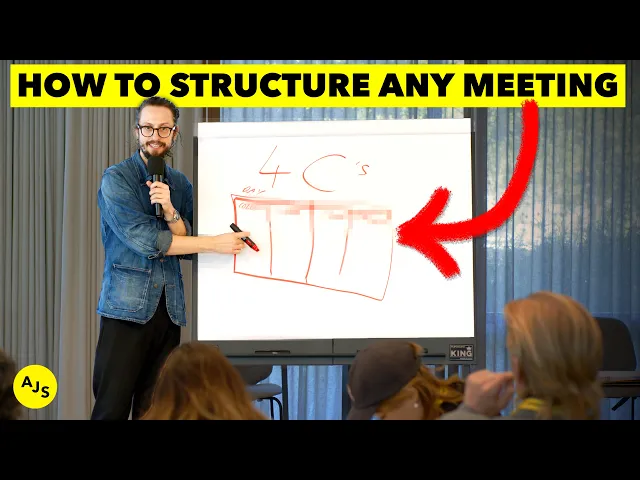
The 4C’s structure gives you a flow to follow for any workshop/session, regardless of topic, length, or industry. Once you internalize it, you can use it to design sessions for any situation.
The Key Principles That Make It All Work
Good Facilitation training should also teach and help you embody core principles that underpin everything and make the techniques you learn actually land and stick.
The core principles that we help our students embody are:
Together, Alone - Participants often work individually, even when sitting together. This helps avoid groupthink and “loudest-voice-wins”. Everyone gets space to think and contribute.
Often Anonymous - Ideas are judged on merit, not source. This lets people be more adventurous and honest.
Creativity is Nice to Have, Not Essential - Many workshops intimidate people by talking about “being creative.” Our approach: the structure replaces the need for creativity. Follow the steps, and good outcomes emerge.
How Long Does Facilitation Training Take?
The amount of time it takes to become a confident Facilitator varies a lot, depending on your goals, commitment level, and amount of time you have to dedicate to learning, but here’s a general rule of thumb:
A few days will give you some new techniques. You’ll walk away with tools you didn’t have before. But you won’t develop deep adaptive capacity: the ability to handle anything.
4-8 weeks is enough to build a solid foundation. You’ll learn the concepts, practice them, get feedback, and start developing real skills. For most people, this is the sweet spot.
3-6 months+ is where you develop genuine expertise. Ongoing practice, community support, real mastery. If facilitation is going to be a big part of your career, this level of investment makes sense.
With that said, intensive programs can be surprisingly effective in quickly mastering facilitation, even if you start one with little or no experience.
When you’re fully immersed - practising all day, getting feedback in real-time, no distractions - you can develop skills faster than you would over months of part-time study.
This is why we created our 5-day immersive training, Full-Stack Facilitator, to help anyone become a confident Facilitator as quickly as possible.
Online vs In-Person: Which Is Better?
If you’re unsure whether you should do an in-person or online program, then the good news is that both can work well, and it’s more down to how you prefer to learn and work.
Online Training
Good online programs give you flexibility. Learn when you want, where you want, when you want. They’re usually more affordable. And you can go through the material at your own pace.
The best online training programs aren’t just videos, though. They include live coaching calls and community interaction. In our experience, a huge amount of the learning happens here.
There is a catch with online programs, though: you need discipline to actually complete them. And you won’t get the same immediate feedback you’d get in a room with people.
In-Person Training
Nothing beats being in a room with people when you’re learning facilitation.
Why? Because facilitation is fundamentally about reading and responding to groups. You can learn concepts online, and you can certainly facilitate online, but practising in a real room with real humans - that’s very different.
When something goes sideways in an in-person training, you can’t pause as easily. You have to respond fast. That pressure alone accelerates learning like nothing else.
There’s also the intangible special feeling of learning in the room with others who are also dedicated and committed to the thing you’re excited about. And there’s the ability to learn through “osmosis” that often happens simply from spending a considerable amount of in-person time with the trainer(s).
The trade-offs are dedicating a chunk of time all at once and probably spending more money.
Our Take
Based on our experience training tens of thousands of people over the years, the best training encompasses both online and in-person elements.
From what we’ve seen, the absolute best way to master facilitation is to learn the foundational knowledge in a relatively flexible online format, and then attend an in-person intensive to lock in the learnings, get practice, and massively accelerate their development.
Many of the best Facilitators we know did exactly this - learned the concepts through our Workshopper Master program, then came to Full-Stack Facilitator to take things to another level.
How Much Does Facilitation Training Cost?
The good news is that you can get started learning the basics of facilitation for free (you’ll find hundreds of hours of facilitation-related videos on our YouTube channel) and only start investing when you want to take it seriously as a career/business-booster or new career path.
Here’s a short breakdown of what you can expect to get for different levels of investment:
What You Get | Typical Cost |
Free resources (like the 100+ hours on our YouTube channel) | $0 |
Budget online courses that teach the basics | $100-500 |
Professional online programs | $2,000-6,000 |
In-person workshops (2-3 days) | $2,000-3,500 |
Premium in-person Deep-Dives (3-5 days) | $5,000-15,000 |
Here’s something to keep in mind when you’re deciding how much to invest in a program:
Things like individual support, community, access to experts, live coaching, feedback, and the ability to practice with peers are all proven to massively increase the efficacy of a training, and the likelihood of successful implementation after the training, but these things cost a training provider to provide (versus just having an on-demand online program), and naturally will lead to the program having a much higher cost.
When you’re considering investing in facilitation training, it’s good practice to ask questions like:
Is there a real methodology, or is it just focused on techniques?
Will I get feedback on my actual facilitation?
Is there a community I can learn from during/after the program?
Are the trainers experienced Facilitators themselves? How much experience do they have?
Will I get coaching throughout the program?
What have past participants actually achieved?
Do You Need Certification?
Certificates of completion are what you get after finishing most training programs, including ours. It’s proof you did the work, they’re great for LinkedIn, and they show your team/clients that you’ve invested in developing your skills.
Industry certifications are different. Organisations such as the IAF (International Association of Facilitators) offer credentials, including the CPF (Certified Professional Facilitator). These require demonstrating real-world experience, and completing a training program often isn’t enough.
Here’s the truth though: from our experience of training tens of thousands of people, most successful Facilitators work without any “formal” certification. They master the skills through a program, get real-world practice, and build a reputation through results and referrals.
Credentials can help when:
- You don’t already have a formal education (a University degree, for example)
- Your employer requires that you get a formal credential
- You need a certification from an official certification body to be able to apply for funding
Credentials matter less when:
- Your company or clients don’t specifically require it (in most cases a certificate of completion is more than enough)
- You’re already a working professional
- You don’t want to do extra logistical work to get a formalized certification when a certificate of completion (from a recognized training producer) feels like enough
All of our programs include certificates of completion that many Facilitators use on LinkedIn, include in their CVs, and reference in proposals for client work.
If you want industry certification (like IAF, CPF etc.), our training can help prepare you, but that credential comes from the certifying body, not from us.
How to Choose a Facilitation Training Program
There are a lot of programs out there. Some are great, but some could leave you frustrated and unprepared. Here are some tips when making your decision:
What to Look For
A real methodology - Not just techniques, but a coherent system that helps you make decisions in any situation. Ask: How will this help me when things go off-script?
Experienced instructors - Have they actually facilitated in high-stakes situations? Or do they just teach facilitation? Big difference. Is expert coaching part of the package?
Practice and feedback - Learning facilitation from videos alone is hard mode. Ideally, you get opportunities to practice with peers and get feedback.
Community - The best learning happens with peers. Is there a community of fellow Facilitators you can learn with/from?
Track record - What have graduates actually achieved? What has the company training you actually achieved, beyond just training people?
Red Flags
Watch out for:
All techniques, no principles or a real methodology to underpin the techniques
Little information about who’s teaching or their real-world experience
Trained made by teachers, instead of experienced Facilitators
No community, support or ability to practice
Training that only prepares you for predictable “best case scenarios" instead of the complex, unpredictable reality of collaboration
Our Programs
We’re dedicated to training the next generation of highly-skilled Facilitators, and we’re proud to have trained over 35,000 people from all over the world.
All our programs are based on 15+ years of real-world experience facilitating for many of the world’s best-known companies.
We offer three core facilitation training programs:
Workshopper Master - Our flagship online program. You’ll master the 4C’s Framework, dozens of key exercises (Sailboat, Lightning Decision Jam, 10 for 10, and more), plus battle-tested workshop recipes you can use immediately. Workshopper Master is a self-paced program that includes live coaching calls, practice sessions, and community support.
Full-Stack Facilitator - Our premium 5-day intensive in Palo Alto or Berlin. This is where you learn and practice our proprietary ECS® methodology (our proprietary system developed from insights from our 15+ years of facilitation experience) giving you the ability to walk into any room and design and run the perfect workshop on the fly. This training is very hands-on and is limited to 60 people per year.
Facilitation Fundamentals - Our entry-level self-paced course if you want to start smaller before investing in a more significant, advanced training.
Getting Started
Learning facilitation is beneficial regardless of whether you want to use it to simply improve meetings at your company, or to build a new career as full-time Facilitator.
If you’re unsure about which training option might be best for you, here’s where we recommend you start:
1. Try free resources first
Our YouTube channel has over 100 hours of free facilitation videos. Everything from workshop design, facilitation techniques, Design Sprints, and real examples. This isn’t just teaser content - it’s the real thing.
We recommend starting there and seeing if our approach resonates. Tens of thousands of Facilitators have started their journey to mastering facilitation from these videos alone.
2. Practice in low-stakes situations
In the next meeting you run, try one new exercise or facilitation tactic. Pay attention to what works. Notice when things go off-track - what triggered it?
3. Invest in structured training when you’re ready
Free resources will take you far, but of course there’s a ceiling. When you want detailed teaching, a community of peers, and a coherent methodology - that’s when structured training makes sense.
FAQ
What’s the difference between facilitation and training?
Training = you’re the expert delivering knowledge. Facilitation = you’re helping the group access and leverage their own knowledge. Different skills, though many people do both.
Can I learn facilitation on my own?
You can learn a lot on your own. Our YouTube channel has hundreds of hours of free content, and plenty of Facilitators started there. But professionalizing and taking things to the next level is hard to do alone. Structured training accelerates development significantly.
How long until I’m actually good?
You can be competent in weeks (or days if you do an intensive) with good training. To become genuinely confident and adaptive? That takes months of practice. Most people see major leaps in their facilitation skills within 2-3 months of focused work.
Do I need to be extroverted?
Nope. Introverts often make excellent facilitators. They tend to be great listeners and observers. What matters is your ability to read group dynamics - not your personality type.
Will AI replace Facilitators?
Here’s the thing: AI is incredibly capable now. It can ideate almost as well as any human. So the question isn’t “can AI do this?”, it’s “what happens when everyone has AI?”
Even in a world where everyone has access to the most powerful AI tools, humans will (at least for the foreseeable future) still need to come together, have meetings, make decisions, and collaborate in one way or another. While that’s happening, there will always be a huge benefit in having someone help them navigate the complexity of collaborative dynamics.
Also, human collaboration is inherently messy and chaotic, and the unexpected collisions between diverse people can produce truly weird, breakthrough ideas. The most exciting innovations seemed illogical at first, and they came from human unpredictability, not optimized outputs. Great Facilitators harness that chaos and can help turn it into something special.
What makes a facilitation methodology actually worth learning?
It should help you feel confident in situations you’ve never encountered. Not scripts or tactics that only work when everything goes to plan. It should equip you with principles and systems that guide you when things get messy.
Is facilitation a good career?
It can be transformative (that was the case for us and many people that we’ve trained). The big shift is going from “order-taker” (executing tasks) to “strategic partner” (guiding decisions).
Execution is becoming more and more commoditized: AI tools generate content, designs, and code faster every day. But human adaptability, reading rooms, and navigating complex group dynamics in real-time? That’s un-automatable (at least for the foreseeable future!)
Skilled Facilitators can charge $2,000-10,000+ per day and benefit from huge time leverage and location freedom.

The Bottom Line
Becoming a Facilitator has serious career-boosting potential, and having facilitation skills is a great way to future-proof your career, regardless of whether you’d like to leverage facilitation as an add-on to what you already do, or build a full-time career as a freelance Facilitator.
To help you get there, it’s worth investing in high-quality facilitation training that builds adaptive capacity, good judgment and confidence, giving you the ability to respond to whatever emerges.
When you’re choosing a program, look for real methodology, experienced instructors, opportunities to practice, and a community to learn with. Avoid programs that teach techniques without principles and that don’t prepare you to be able to handle complexity in real-time.
And remember: you don’t have to invest thousands of dollars to start. We’ve got 100+ hours free on YouTube. Start there and when you’re ready for more, we’re here.
Explore our training programs here.
Free Facilitation Resources!
Join the Facilitator.com newsletter to get free Facilitation tools, news,
methods and resources right to your inbox.
Sent sparingly. Always relevant.