Facilitation
Can You Really Learn Facilitation Online?

Laura Faint
You've been thinking about learning facilitation, but you keep coming back to the same question: can you actually get good at this through a screen?
It makes sense to ask this. Facilitation is fundamentally about working with groups of people, reading rooms, navigating dynamics in real-time, and making judgment calls when things get messy and unpredictable. That doesn't exactly scream "self-paced online course."
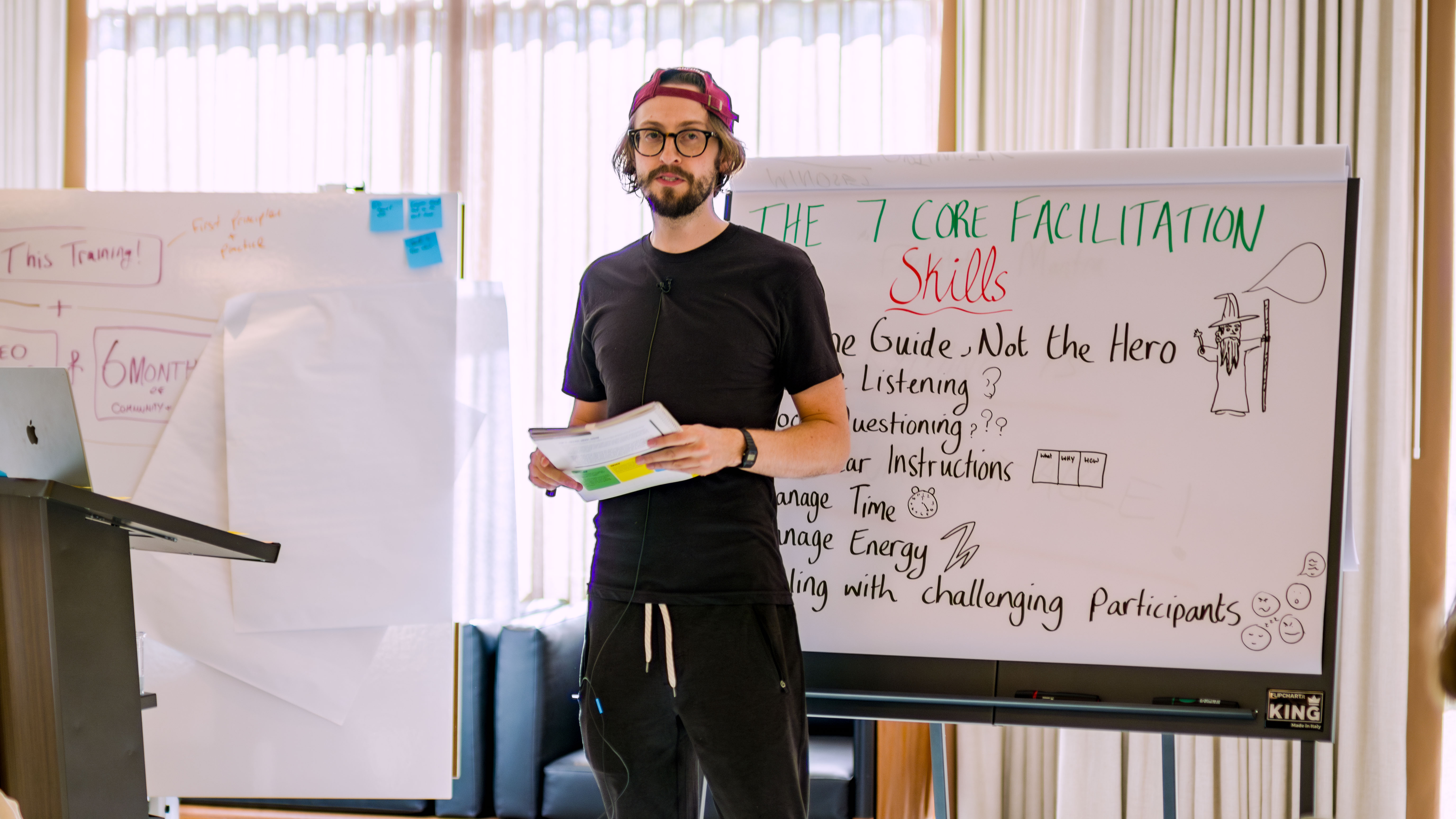
Well, here's what we've found after training over 35,000 Facilitators, the vast majority of them online: yes, you absolutely can learn facilitation online, and learn it well. Some things work excellently and naturally in an online format, and other things require more intentionality to develop when you're not in a physical room with a group. Understanding the difference will help you get the most out of whichever program you choose, and set realistic expectations for your learning journey.
For a look at some of the best online programs available, check out our guide to online facilitation courses.
What Works Great Online
Some parts of facilitation training actually work better online than in person, and it's worth understanding why.
Concepts and Frameworks
Understanding how groups function, why meetings fail, what makes collaboration work, and the psychology behind how people behave in group settings are all topics you can learn easily from video content and reading. In some ways, online is a better format for this kind of learning because you can pause, rewatch, take notes at your own pace, and come back to concepts months later when they suddenly become relevant to a real situation you're facing.
Session Design
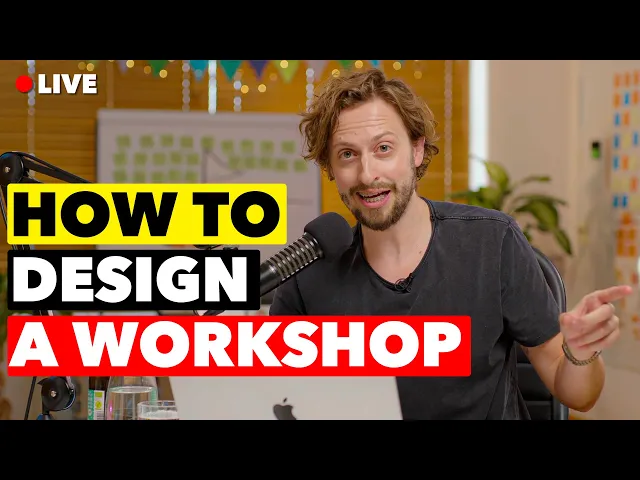
Planning workshops, structuring agendas, choosing the right activities, sequencing exercises, and building flow are all very teachable online. You don't need a physical room to learn how to design an effective session. You need clear instructions, good examples to learn from, and the chance to practice designing for real scenarios.
Techniques and Methods
The mechanics of facilitation, like learning how to run a brainstorm, how to facilitate a decision-making exercise, how to structure a debrief, and how to manage group energy, are learnable from anywhere. Watch how something is done, understand the principles behind why it works, and then try it in your own context.
Reflection and Integration
One thing that online learning does naturally is build in space for reflection. You learn a concept, try it in a real meeting or workshop, reflect on what happened, adjust your approach, and then learn more. That cycle of learning and applying is incredibly powerful, and the self-paced nature of online training gives you the breathing room to do it properly rather than rushing through everything in a single intensive week.
What's Genuinely Harder to Learn Online
We want to be honest about the limitations too, because understanding them helps you prepare for them.
Real-Time Pressure
When you're standing in a room facilitating 20 people, there's nowhere to hide. You have to respond in real-time to unexpected questions, difficult dynamics, and moments where everything goes off-script. That pressure accelerates learning in a way that's harder to fully replicate online, where the stakes feel lower and there's more time to think before responding.
Reading Physical Presence
Body language, energy levels in a room, subtle signals that something is shifting in the group dynamic are things you can learn about online, and video-based practice helps to some extent, but developing that intuitive sense of how a room feels is something that deepens faster through in-person experience.
Immediate, In-Person Feedback
In face-to-face training, an instructor can watch you facilitate and give feedback on the spot. They see your body language, your energy, the way you're affecting the room. Online feedback through coaching calls and virtual practice is valuable, and our programs do build this in, but it's not quite the same fidelity as having someone right there with you.
How to Bridge the Gap
The good news is that these limitations aren't dealbreakers. They're things you can actively work on, and the best online programs are designed with them in mind.
Practice constantly, not just when you feel ready. The biggest mistake people make with online learning is treating it like something to watch and absorb. Every concept you learn, try applying it immediately in your next team meeting, your next project kickoff, or even in a conversation with friends. The transfer from "understood" to "can do" only happens through repetition, and you don't need to wait for a formal facilitation opportunity to start getting those reps in.
Seek feedback wherever you can find it. If your program has live coaching calls, use them. If there's peer practice, take it seriously. If there's a community, ask questions and share your experiences. Outside of formal channels, ask participants after sessions you facilitated what worked and what didn't. You'd be surprised how willing people are to give you honest input when you genuinely ask for it.
Think of online training as a foundation, not a finish line. The concepts, frameworks, techniques, and judgment that underpin great facilitation are absolutely learnable online. Then you build on that foundation through real experience, real stakes, real learning from real situations. Online training gives you the knowledge. Practice gives you the skill. Both matter.
Consider a hybrid path. Many of our most successful Facilitators started online and went in-person later. They began with Workshopper Master to build core knowledge and learn our Emergent Collaboration System (ECS®) methodology on their own schedule, and then when they wanted to go deeper and experience the intensity of in-person practice, they attended Full-Stack Facilitator. You don't have to choose one path and stick with it forever. Instead, start where it makes sense for your life right now, and build from there.
What Good Online Facilitation Training Actually Looks Like
Not all online programs are equal, and the difference between a genuinely effective program and "just videos with a certificate" is significant. Here's what to look for:
A real methodology that gives you an "operating system" for facilitation, not just a collection of techniques to memorize. Something that teaches you how to think about facilitation so you can make good decisions in any situation, even ones you've never encountered before.
Live elements that create real interaction. Coaching calls with experienced Facilitators, peer practice sessions, Q&A where you can ask about the specific challenges you're facing: these are what separate learning about facilitation from actually developing as a Facilitator.
A community of peers going through the same journey. This keeps you accountable, surfaces insights you'd miss learning alone, and gives you people to turn to long after the program content is finished.
Ongoing access so you can revisit content months later when new challenges make old lessons suddenly relevant in new ways.
For a detailed comparison of the online programs available, our guide to online facilitation courses breaks down what each one offers and who it's best suited to.
If you're ready to explore structured training with us, check out Workshopper Master or start with Facilitation Fundamentals if you'd prefer to begin smaller with a lower investment. If you want to see what our graduates think, you'll find hundreds of reviews here.
Our Honest Take
Can you successfully learn facilitation online? Definitely, but with some caveats.
The concepts, frameworks, techniques, and judgment that underpin great facilitation are absolutely learnable online. With a good program and intentional practice, you can build real, transferable skills that make you genuinely effective in a room (or on a screen) with a group of people.
But no format is magic. You have to actually do the work: practice what you learn in real situations, seek feedback, engage with community, and treat the program as a starting point that you build on through experience.
For most people, starting online makes the most sense. It's accessible, it fits around your life, and when it's done right, it works very well. We've seen it work for tens of thousands of people.
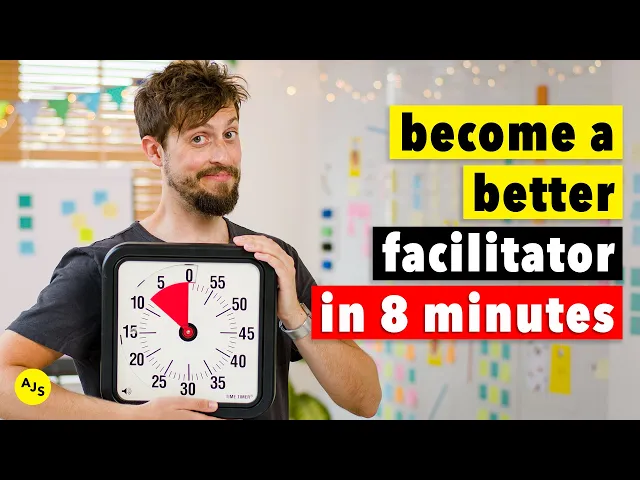
If you’re still unsure, a great place to start is our free content on YouTube to see if our approach resonates. When you're ready for more structure, explore Workshopper Master or Facilitation Fundamentals. And if you want to connect with other Facilitators on the same journey, our free community of 9,800+ members, Facilitator Club, is a great place to start.
FAQ
Does online facilitation training prepare you for in-person facilitation? Yes. The core skills (session design, methodology, managing group dynamics, choosing the right activities) are the same whether you're facilitating in a boardroom or on a Zoom call. What differs is the medium, not the fundamentals. Many Facilitators who trained entirely online are now running in-person workshops for Fortune 500 companies. The key is to practice in whatever setting you have access to, even if it starts with team meetings and small group sessions.
How long does it take to get good at facilitation through online training? You can learn foundational concepts in days. Developing real competence takes weeks with good training and consistent practice. Genuine confidence and the ability to adapt on the fly? That builds over months of real facilitation experience. The key is not to wait until you've finished a program to start practicing. Start applying what you learn from the very first lesson.
What if self-paced online learning usually doesn't work for me? If you've struggled with self-paced learning in the past, look for programs that include live coaching calls, community platforms, and some sort of accountability built into the experience. These create the human connection and structure that pure self-paced content can't provide. Workshopper Master includes live coaching calls and community access for exactly this reason. If you learn best in person, our Full-Stack Facilitator intensive might be a better starting point for you.

Free Facilitation Resources!
Join the Facilitator.com newsletter to get free Facilitation tools, news,
methods and resources right to your inbox.
Sent sparingly. Always relevant.