Facilitation
Online Facilitation Courses: What Actually Works (2026 Guide)

Laura Faint
If you've been looking into facilitation training, chances are you've already noticed that there are a lot of online courses out there, and most of them look pretty similar on the surface: some videos, maybe a certificate, maybe a few downloadable templates.
There are a lot of great facilitation training options out there, but the problem is that many of them are quite incomplete. Not because the content isn’t good, but because they're missing a critical component. A component that really makes someone a confident Facilitator: the ability to handle real, messy, unpredictable group dynamics in real-time.
Here's what usually happens: you sign up for an online facilitation course, watch some videos, do a quiz or two, get a certificate, and feel like you're ready to go. Then you try to actually facilitate a session with real people, and it falls apart because something unexpected happens. The key is learning the systems, tactics, and techniques of facilitation, but also learning how to confidently navigate the inevitable but unpredictable complexity that emerges when people work together in real-time.
The purpose of this article is to help you figure out what to look for in an online facilitation course (and what to avoid) so you end up with robust skills, not just another certificate in your downloads folder. We've trained over 35,000 people online, so we have strong opinions on what works and what doesn't.
Can You Really Learn Facilitation Online?
Facilitation is fundamentally about working with groups, reading rooms, and navigating human dynamics, so how can you learn that through a screen?
It's a fair question, and the honest answer is that there are some things you can learn fully online, and some things that are harder to replicate in a virtual environment.
From our experience training tens of thousands of people across both formats, here's how we think about it:
What Works Great Online
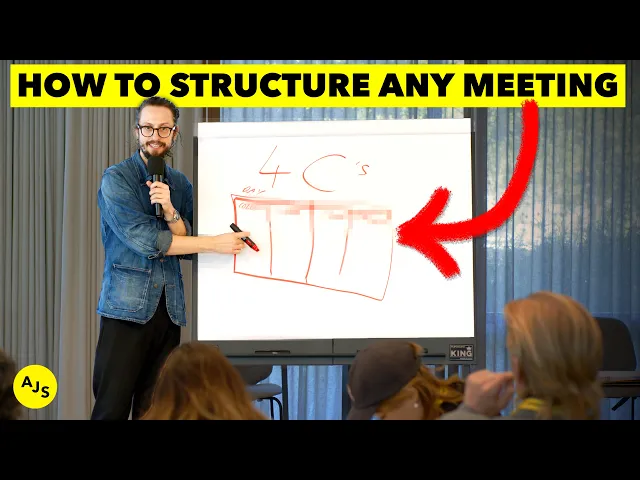
Concepts and frameworks - Understanding how groups work, why meetings fail, and what makes collaboration click. Things like our 4C's Framework (Collect, Choose, Create, Commit), which is a pattern that underpins all successful workshops, can actually be better learned online in some ways because you can pause, rewatch, and take notes at your own pace.
Session design - Planning workshops, structuring agendas, and choosing the right exercises. Learning principles like "Together, Alone" (where participants work individually to avoid groupthink) and Anonymous Voting (where ideas are judged on merit, not source) doesn't require being in a physical room, they just require good instruction.
Tools and techniques - Brainstorming methods, voting exercises, decision-making frameworks, and the general mechanics of facilitation are all totally teachable online.
What's Harder Online
Real-time adaptation - When something goes wrong mid-session (and it will), knowing what to do in the moment is harder to practice without an actual group in front of you.
Reading physical presence - Body language, energy in a room, and those subtle signals that something's off are things that video can't fully capture.
Pressure testing - The experience of being in the hot seat with real people watching, the nerves, the stakes, the adrenaline of navigating a tricky moment live, is harder to replicate through a screen.
How the Best Online Courses Bridge the Gap
The best online courses know their limitations and don't pretend that learning the techniques alone will make you a master Facilitator. Instead, they combine on-demand content for concepts and frameworks with some sort of coaching element, a way for you to get practice (this practice can happen online), and a community of peers to learn with and get feedback from.
That combination is how you bridge the gap between watching and doing, and it's also why "just videos and a certificate" courses rarely are enough on their own to produce confident Facilitators.
What Should an Online Facilitation Course Actually Teach You?
Most courses teach you techniques: how to run a brainstorming session, how to do a voting exercise, how to facilitate a discussion. Techniques are useful and you absolutely need them, but here's what most courses miss: what do you do when the technique stops working?
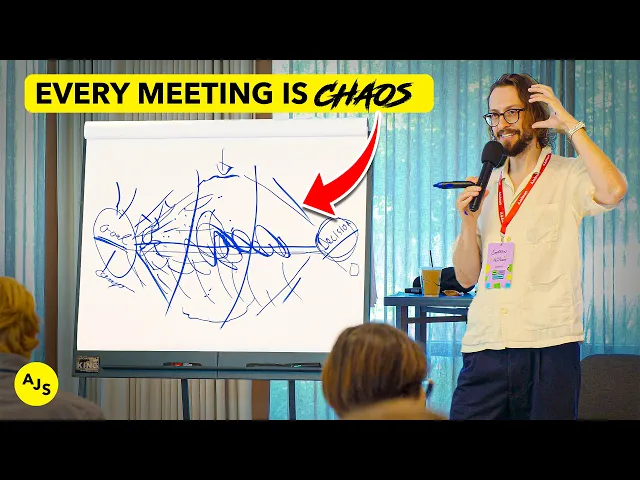
Imagine this: someone derails your carefully planned exercise, two stakeholders start arguing, half the group goes silent, the energy in the room tanks, the client changes the brief halfway through, or your technology fails. If your training only gave you scripts to follow, you're stuck, because you don't know what to do when the script breaks down.
We see this all the time. Facilitators who are excellent when everything goes smoothly, but who fall apart the moment something unexpected happens. And the truth is, something unexpected almost always happens.
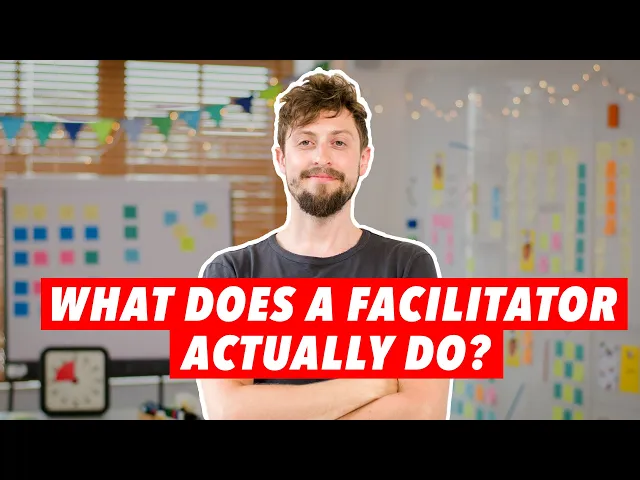
Beyond Techniques: Why You Need a Real Methodology
The best facilitation training gives you something deeper than a toolbox of techniques. It gives you judgment, the ability to read a situation and figure out what's needed in the moment, even when you've never encountered that exact scenario before.
That's why we built our programs around the Emergent Collaboration System (ECS®). ECS® is built on five components:
Insights - Understanding how groups actually work (not how you wish they work)
Principles - Beliefs that guide your decisions when there's no obvious answer
Structures - Flexible frameworks you can adapt to any situation
Skills - The interpersonal stuff that can make or break a session
Activities - A set of exercises you can combine and remix on the fly
And what happens when you learn ECS®? Instead of learning "do this, then this, then this", you develop the judgment and confidence to figure out exactly what's needed in each unique moment. You no longer need to rely on everything going smoothly, everyone being in a good mood, and on brute forcing the agenda you've prepared, even if it doesn't seem to be playing out as you'd hoped.
That's what separates Facilitators who can only handle predictable sessions from those who thrive in whatever is thrown at them.
Types of Online Facilitation Courses
Not all courses are built the same, and understanding the different formats will help you figure out which one is the best fit for how you learn and what you need.
Self-Paced Video Courses
The most common format: pre-recorded videos you watch whenever you want.
Good for: Learning foundational concepts on your own schedule and fitting facilitation training around a busy life.
Watch out for: Courses that are just videos and nothing else. No community, no feedback, no practice. These teach you about facilitation without helping you actually do facilitation, which is a critical distinction.
Live Cohort Programs
You go through the course with a group, typically over several weeks, with live sessions, group discussions, and peer practice built in.
Good for: Accountability (you won't just let it sit unwatched for months), connection with fellow learners, and real-time Q&A with instructors.
Watch out for: Rigid schedules that don't fit your life, or programs where the "live" element is just Q&A rather than actual facilitation practice.
Hybrid Programs
These combine self-paced content with live elements, so you watch videos when convenient and join live sessions for coaching and practice.
Good for: The best of both worlds, giving you flexibility plus human connection. From our experience, this is where a huge amount of the real learning happens, because you get the theory at your own pace and then actually apply it with real people.
Watch out for: Make sure the live component is substantial (and ideally allows you to interact with or ask questions to an expert) and not just a token add-on to justify a higher price.
Intensive Bootcamps
A compressed format where you learn a lot in a short time, sometimes a weekend or a full week of live virtual sessions.
Good for: Rapid immersion when you need skills quickly.
Watch out for: These can be overwhelming, and without ongoing support afterwards, there's a risk that everything you learned evaporates within a few weeks. Make sure there's some form of continued practice or community after the bootcamp ends.
What to Look for in an Online Facilitation Course
Here's a checklist to look through when you’re deciding which program to choose:
A Real Methodology
Not just a list of techniques to learn, but a coherent system that helps you make decisions when you’re hit with something unexpected in a session. The question to ask is: does this course teach me what to do in the moment when things go wrong, or is it more that I’ll learn some fixed techniques and step-by-step workshops? If it's the latter, keep looking.
Practice Opportunities
You can't learn facilitation only by watching. You have to do it. Look for courses that include live practice sessions and the ability to ask experts questions. If there's no opportunity to practice and get feedback, you're essentially paying for a YouTube playlist.
Community
Learning with others matters more than most people expect. The best insights often come from peers rather than instructors: their questions, their struggles, and their wins all become part of your learning. Plus, a community can keep you going when motivation dips (which it will, especially with self-paced programs).
If you're not ready to invest in a paid program yet, our free Facilitator Club community (9,800+ members) is a great place to start connecting with other Facilitators and learning from their experiences!
Support After You Finish
The course ends. Then what? Good programs give you some ongoing access to communities, resources, and a place to ask questions when you're stuck on a real challenge three months later. This matters more than people think, because some of the most important learning happens after the course, when you're applying things in the real world and running into situations you didn't encounter during training.
Experienced Instructors
Who's teaching, and have they actually facilitated in high-stakes situations with difficult groups? Or do they just teach facilitation without practising it? That's a big difference, and it shows in the quality of the training. Look for programs taught by practitioners who facilitate regularly, not just trainers who've read about it.
Clear Outcomes
What will you actually be able to do after completing the course? Be specific with yourself about what you're looking for. "Learn facilitation skills" is vague. "Design and run a 2-hour prototyping workshop confidently" is concrete, and the course should be able to tell you exactly what outcomes to expect.
Red Flags to Avoid
From our experience of speaking with tens of thousands of Facilitators over the years, here are the warning signs that should make you think twice about a program:
No live interaction - If it's just videos with no coaching component, that alone likely won't be enough to turn you into a confident Facilitator. If you’re looking to learn the absolute basics through videos then there's plenty of excellent free content out there (including the 100+ hours on our YouTube channel) that will serve you just as well.
No community or support - If you're learning completely alone with no peers or instructors to ask questions, you're going to struggle when you hit the inevitable "how do I handle this?" moments.
Vague about instructors - If a program won't tell you who's teaching and what their real-world facilitation experience looks like, it’s worth looking elsewhere. Are the trainers experienced Facilitators themselves, or are they people who teach facilitation without actually doing it?
Heavy on theory, light on practice - Facilitation is a doing skill, and if the course is all concepts and doesn’t encourage you to start applying fast, it’s less likely to stick.
“Too good to be true” pricing - Quality facilitation instruction costs money because it requires experienced practitioners, live sessions, and ongoing community support. A $50 course probably isn't going to transform your facilitation abilities.
All techniques, no principles - If a program teaches you what to do but not why, or how to adapt when things go sideways, it's only preparing you for best-case scenarios (and facilitation is rarely a best-case scenario).
How Much Do Online Facilitation Courses Cost?
The good news is that you can get started learning the basics of facilitation for free (you'll find hundreds of hours of facilitation-related videos on our YouTube channel) and only start investing money when you want to take it seriously as a career-booster or new career path.
Here's a short breakdown of what you can expect to get for different levels of investment:
What You Get | Typical Cost |
Free resources (like the 100+ hours on our YouTube channel) | $0 |
Budget self-paced courses | $100-1,000 |
Professional online programs | $2,000-6,000 |
Premium programs with live coaching | $4,000-10,000+ |
Here's something to keep in mind when you're deciding how much to invest in a program: things like individual support, community, access to experts, live coaching, feedback, and the ability to practice with peers are all proven to massively increase the efficacy of a training and the likelihood of successful implementation afterwards, but these things cost a training provider to provide (versus just having an on-demand online video program), and naturally will lead to the program having a higher cost.
When you're considering investing, it's worth asking questions like: Is there a real methodology, or is it just focused on techniques? Will I get access to experts? Is there a community I can learn from during and after the program? Are the trainers experienced Facilitators themselves? What have past participants actually achieved?
Online vs In-Person: Which Should You Choose?
If you're unsure whether you should do an in-person or online program, the good news is that both can work really well, and it mostly comes down to how you prefer to learn, what fits your schedule, and where you are in your facilitation journey.
Online is great if:
You can't take a week off for travel
You learn well independently and have the discipline to complete self-paced courses
You want to go at your own pace and apply learnings as you go, over weeks
Budget is a constraint
Consider in-person if:
You want maximum immersion with no distractions
You learn better with people physically around you
You have the time and budget for a dedicated intensive
Facilitation is going to be central to your career and you want to accelerate your development
Our recommendation: From our experience training tens of thousands of people over the years, the best training encompasses both online and in-person elements. Learn foundational knowledge in a flexible online format, then attend an in-person intensive to lock in the learnings, get hands-on practice, and massively accelerate your development.
Many of the best Facilitators we know did exactly this: learned the concepts through our Workshopper Master program, then came to Full-Stack Facilitator to take things to the next level. These two programs are incredibly complementary and allow students to leverage the best of both online and in-person learning.
Our Online Facilitation Courses
We've spent 15+ years figuring out how to teach facilitation online (and we've made plenty of mistakes along the way). Here's what we offer now:
Workshopper Master
Our flagship online program, and where most of our 35,000+ trained Facilitators started.
You'll master the 4C's Framework, dozens of key exercises (Sailboat, Lightning Decision Jam, 10 for 10, and more), plus battle-tested workshop recipes you can use immediately. Workshopper Master is a self-paced program that includes live coaching calls, practice sessions, and community support. There's also a business and marketing module if you want to facilitate professionally, because being a great Facilitator and being able to sell your facilitation services are two very different skills, and we believe both are critical for anyone looking to build a career in this space.
Best for: People who are serious about developing strong facilitation skills, whether for internal use, adding facilitation to your consulting practice, or starting a facilitation career.
Learn more about Workshopper Master
Facilitation Fundamentals
Our entry-level, “learn the basics”, self-paced course if you want to start smaller before investing in a more significant, advanced training.
What it includes:
4.5 hours of video content
160+ page workbook
Core techniques and principles
Certificate of completion
Best for: Testing the waters and getting the core foundational skills without a major investment.
Learn more about Facilitation Fundamentals
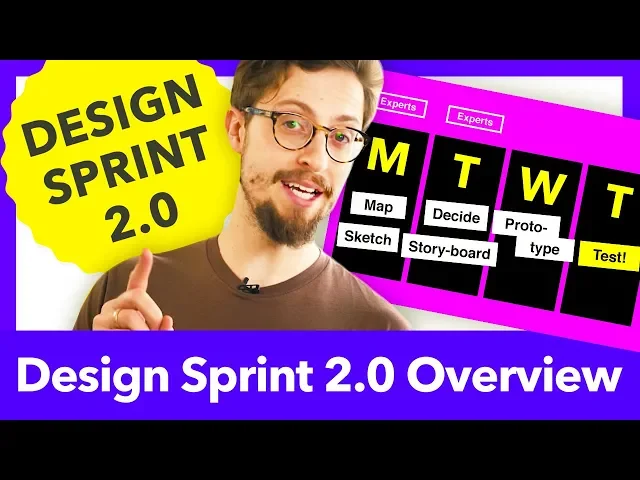
Design Sprint Masterclass
If you're specifically interested in Design Sprints (the Google Ventures method for rapid problem-solving that we've been running with companies like Google, Lego, and Slack for over a decade).
What it includes:
70+ videos
Created with Jake Knapp (inventor of the Design Sprint)
Design Sprint 2.0 methodology
Dual-signed certificate
Best for: Product teams, innovators, and anyone who wants to master the Design Sprint format specifically.
Learn more about Design Sprint Masterclass
Getting Started
Here's the path we'd recommend, regardless of which course or program you eventually choose:
1. Try free resources first
Our YouTube channel has over 100 hours of free facilitation training: workshop design, facilitation techniques, Design Sprints, real examples of sessions we've run, and much more. This isn't watered-down teaser content designed to funnel you into a purchase. It's genuine instruction that's helped tens of thousands of Facilitators start their journey. See if our approach resonates before spending money.
2. Practice immediately
Don't wait until you feel "ready." Bring one workshop exercise into your next meeting, even if it's only for 5 minutes. Pay attention to what works and what doesn't, and notice when things go off-track and ask yourself what triggered it. The gap between learning and doing is where most people get stuck, and the sooner you close that gap, the faster you'll develop real facilitation skills.
3. Invest in structured training when it makes sense
Free resources will take you surprisingly far, but of course there's a ceiling. When you want a coherent methodology to guide your decisions, expert coaching, and a community of peers on the same journey, that's when paid training pays off.
FAQ
Can I get certified through an online facilitation course?
There's an important difference between certificates and certification. Most online courses (including ours) offer certificates of completion, which are proof you did the work and are great for LinkedIn and client proposals.
Industry certifications are different. Bodies like the IAF (International Association of Facilitators) offer credentials like the CPF (Certified Professional Facilitator), which require demonstrating real-world experience, and completing a training program often isn't enough on its own. Our training can help prepare you for that, but the credential comes from the certifying body, not from us.
Here's the truth, though: from our experience of training tens of thousands of people, most successful Facilitators work without any "formal" certification. They master the skills through a good program, get real-world practice, and build their reputation through results and referrals.
How long does it take to get good at facilitation online?
You can learn foundational concepts in days and develop real competence in 4-8 weeks with good training and consistent practice. Genuine confidence and adaptability, the kind where you can walk into any situation and feel like you'll be able to handle it, takes months of actual facilitation experience.
The key is practice. Don't just watch content. Use what you learn immediately, even in low-stakes situations like team check-ins or project kickoffs. Most people we work with see major leaps in their facilitation abilities within 2-3 months of focused effort.
Is online facilitation training worth it?
It depends entirely on the training. A good online course with practice opportunities, community, and a real methodology behind it? Absolutely worth it.
Videos alone with no support or feedback? Probably not worth paying for, because you can find free content that's just as good (like our YouTube channel, which has over 100 hours of free facilitation content).
What if I'm an introvert?
You'll probably be fine, maybe better than fine, actually. Introverts often make excellent Facilitators because they tend to be better listeners and more natural observers of group dynamics.
Facilitation isn't about being the loudest person in the room. It's about helping others do their best thinking, and introverts tend to be naturally good at creating space for that.
Will AI replace the need for Facilitators?
This is a question we get asked a lot, and it's a good one. AI is incredibly capable now. It can ideate, synthesize, and organize information almost as well as any human. So the question isn't "can AI do this?", it's "what happens when everyone has AI?"
Even in a world where everyone has access to the most powerful AI tools, humans will still need to come together, have meetings, make decisions, and collaborate on complex problems. While that's happening, there will always be a huge benefit in having someone skilled at helping them navigate the complexity of collaborative dynamics.
Human collaboration is also innately messy and chaotic, and the unexpected collisions between diverse people can produce truly weird, breakthrough ideas. The most exciting innovations often seemed illogical at first, and they came from human unpredictability, not optimized outputs. Great Facilitators harness that chaos and help turn it into something special.
So learning facilitation isn't just a good skill to have, it's actually one of the best ways to future-proof your career.
Is facilitation a good career?
Yes! It can be a total game-changer (that was the case for us and many people we've trained). Skilled Facilitators can charge $2,000-10,000+ per day and benefit from huge time leverage and location freedom.
The big shift is going from "order-taker" (executing tasks) to "strategic partner" (guiding decisions). Execution is becoming more and more commoditized by AI, but human adaptability, reading rooms, and navigating complex group dynamics in real-time? That's un-automatable (at least for the foreseeable future!).

The Bottom Line
You can absolutely learn facilitation online. We've trained 35,000+ people that way and have seen firsthand what incredible things they've gone on to do.
But not all online courses are equal. Look for real methodology (not just techniques), practice opportunities, community, and experienced instructors. Avoid anything promising overnight mastery or offering just videos with no other support.
Free resources are a great place to start and practice immediately, even in small ways. And when you're ready for structured training, choose something that actually helps you do facilitation, not just learn about it.
And remember: you don't have to invest thousands of dollars to start. We've got 100+ hours free on YouTube. Start there and when you're ready for more, we're here!
Explore our training programs here.
Free Facilitation Resources!
Join the Facilitator.com newsletter to get free Facilitation tools, news,
methods and resources right to your inbox.
Sent sparingly. Always relevant.